 Skip to content
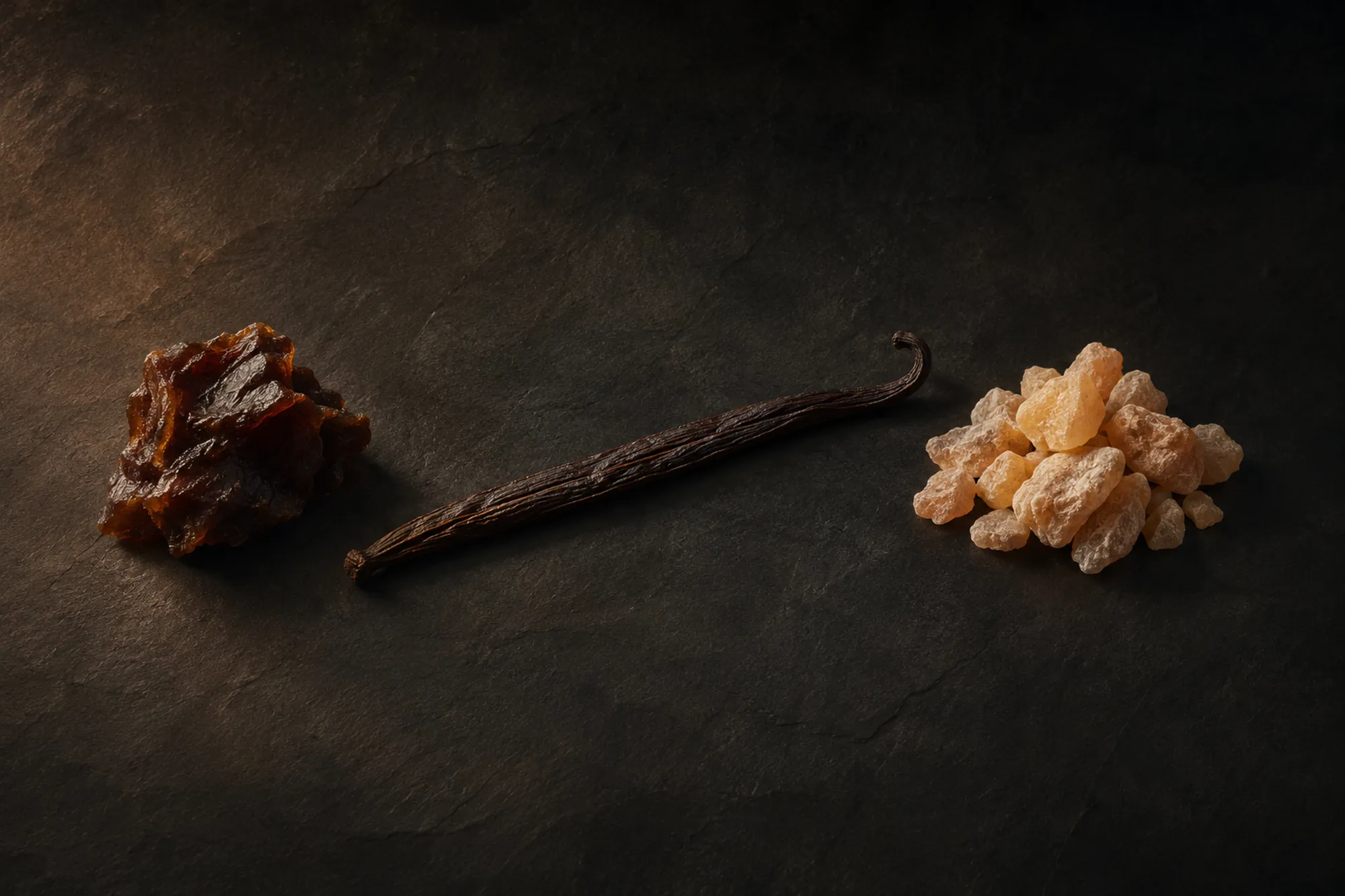
An amber fragrance is warm and resinous, with a soft sweetness, and it is built on an accord of labdanum, vanilla and benzoin. The name has nothing to do with the fossil in jewellery, which has no smell. Amber is one of the twelve fragrance families in the PRFMST app and the fourth largest: more than 1,000 fragrances have it as their main family, and nearly every one of them is tagged for autumn or winter.
My own collection started with designer fragrances, before niche and Middle Eastern houses had my attention. At some point I found out that most of what I owned contained the same two things: iris and amber. Dior Homme Intense, Dior Homme Parfum and Dior Homme Sport all list amber. So do Chanel Allure Homme Sport and Prada L’Homme.
None of those five is filed as an amber. In the app the two darker Dior Hommes are Floral first, the Sport and the Chanel are Citrus, and the Prada is Aromatic. That is how amber usually turns up. More than 3,300 fragrances in the app list amber as a note, and fewer than 600 of them belong to the amber family.
How an amber fragrance is built
Three materials do most of the work. Labdanum is a dark resin from the rockrose shrub, leathery and warm, and it has a story of its own. Vanilla brings the sweetness. Benzoin is the resin of Styrax tonkinensis, a tree that grows on the high plateaus of northern Laos, and Givaudan describes its smell as balsamic and vanilla-like. The trade calls it Siam benzoin because it used to be shipped through Bangkok.
Tonka bean often joins them. Our own numbers show the recipe: of the ambers in the app, more than 600 list vanilla, more than 250 tonka bean, and about 200 each labdanum and benzoin. More than 550 simply say “amber”, which is a brand naming the accord without giving the parts. These are heavy materials. They sit in the base, and they’re the last to leave the skin. Labdanum does the same job in a chypre, under moss in place of vanilla.
Where amber came from
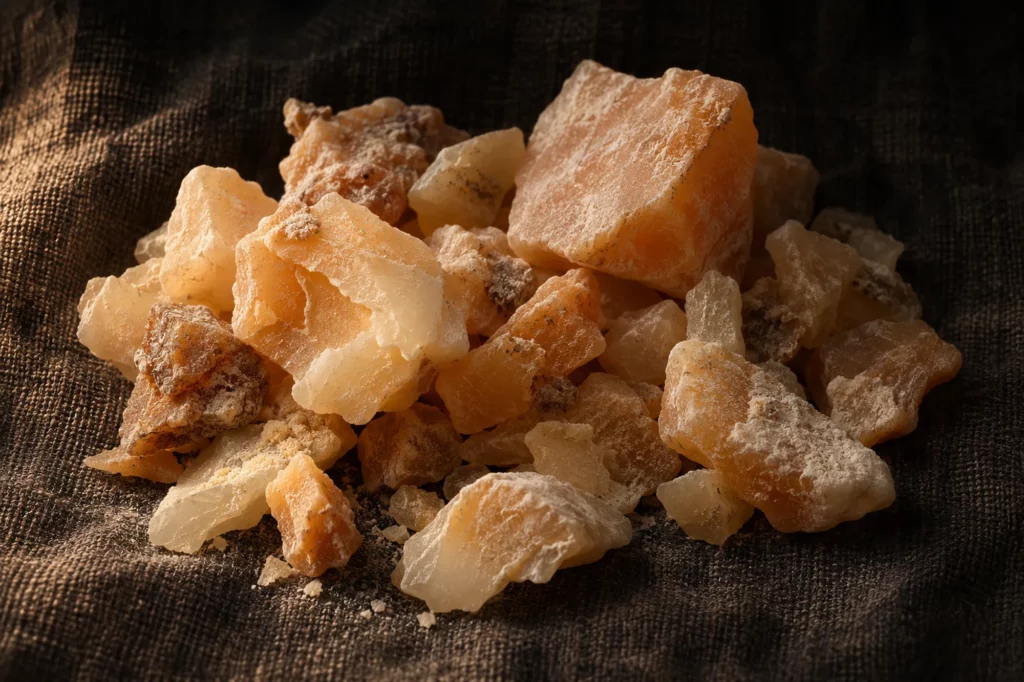
Guerlain dates it to 1925. That year Jacques Guerlain made Shalimar, which the house now calls the first amber in history. By Guerlain’s own account he took the accord of Jicky, which Aimé Guerlain had made in 1889, and blended it with ethylvanillin, a vanilla molecule that was new at the time. LVMH, the group Guerlain belongs to, tells it more simply: he poured a few drops into a bottle of Jicky.
Both are still in the app. Jicky is filed as Aromatic, with Amber as a second family. Shalimar is Amber first.
The styles within the family
Amber almost never stands alone. Of more than 1,000 ambers in the app, three have no second family. The largest group is the woody amber, with more than 480: sandalwood, cedar, patchouli or oud under the resin, which makes it drier. Spicy comes next with more than 400, where saffron, cinnamon and cardamom heat the top. About 350 are floral ambers, the line that starts at Shalimar, with rose or jasmine over the vanilla. And more than 270 lean gourmand: praline, honey or caramel push the sweetness towards dessert.
Incense is a regular guest. More than 230 ambers list it, a cooler and drier resin next to the warm ones, and it gets its own piece in our story on incense.
Amber, ambergris and ambroxan
Three words for three things. Amber is the accord described above. Ambergris is an animal material that comes from the sperm whale. The fragrance house dsm-firmenich says it began decoding ambergris in the 1930s and discovered Ambrox, a molecule with its smell, in the 1950s. On a note list you’ll mostly see it written as ambroxan. More than 500 fragrances in the app list ambroxan and more than 550 list ambergris.
So “amber” in the base of a fresh fragrance can point either way: to the resins, or to this cleaner, woodier material. I can’t tell from a note list which one a brand means, and brands rarely say.
Five amber fragrances to know first
1. The accord itself: L’Artisan Parfumeur L’Eau d’Ambre
L’Artisan Parfumeur L’Eau d’Ambre (Eau de Toilette, by Jean Laporte) has four notes, all of them in the base: benzoin, labdanum, patchouli and tonka bean. That is the recipe from the top of this page with patchouli added and nothing put in front of it. I’d start here for that reason. There’s no citrus or flower to look past. The app files it as Amber first, with Woody, for autumn and winter.
2. The floral amber: Guerlain Shalimar
Guerlain Shalimar (Eau de Parfum, by Jacques Guerlain) opens with bergamot and flowers, has iris, jasmine and rose at its heart, and rests on vanilla, tonka bean and balsamic notes. Guerlain says the name means “temple of love” in Sanskrit. I think the bergamot matters as much as the vanilla here: it puts something sharp on top of all that sweetness. Amber first, with Floral, for autumn and winter.
3. The spicy amber: Yves Saint Laurent Opium
Yves Saint Laurent Opium (Eau de Parfum) dates from 1977. Mandarin and bergamot, then myrrh and jasmine, then amber, opoponax, patchouli and vanilla. Myrrh and opoponax are resins too, so this is the accord with two more of them stacked on it. Amber first, with Spicy. The app tags it dark and bold, for a date night or a formal evening.
4. The honeyed amber: Hermès Ambre Narguilé
Hermès Ambre Narguilé (Eau de Toilette, by Jean-Claude Ellena) is short on paper: fruit on top, honey and spices in the heart, amber and toasted sesame in the base. Toasted sesame is the one note in this guide that you could find in a kitchen cupboard, and it shows which way the gourmand ambers lean. Amber first, with Spicy and Gourmand, and tagged cosy.
5. The amber with dates and praline: Lattafa Khamrah
Lattafa Khamrah (Eau de Parfum, 2022) starts with cinnamon, nutmeg and bergamot. Dates, praline and tuberose fill the heart, next to a material the brand lists as Mahonial. The base has vanilla, tonka bean, amberwood, myrrh, benzoin and Akigalawood. Look at that base again: vanilla, tonka and benzoin, ninety-seven years after Shalimar. It carries the same three families as Ambre Narguilé, Amber first with Spicy and Gourmand.
Questions about amber fragrances
What does amber smell like in a perfume?
Warm and resinous, with a little sweetness: vanilla and soft resins, with a leathery depth from labdanum. It is the smell of the base of a fragrance, the part that stays longest.
Is amber in perfume the same as the gemstone?
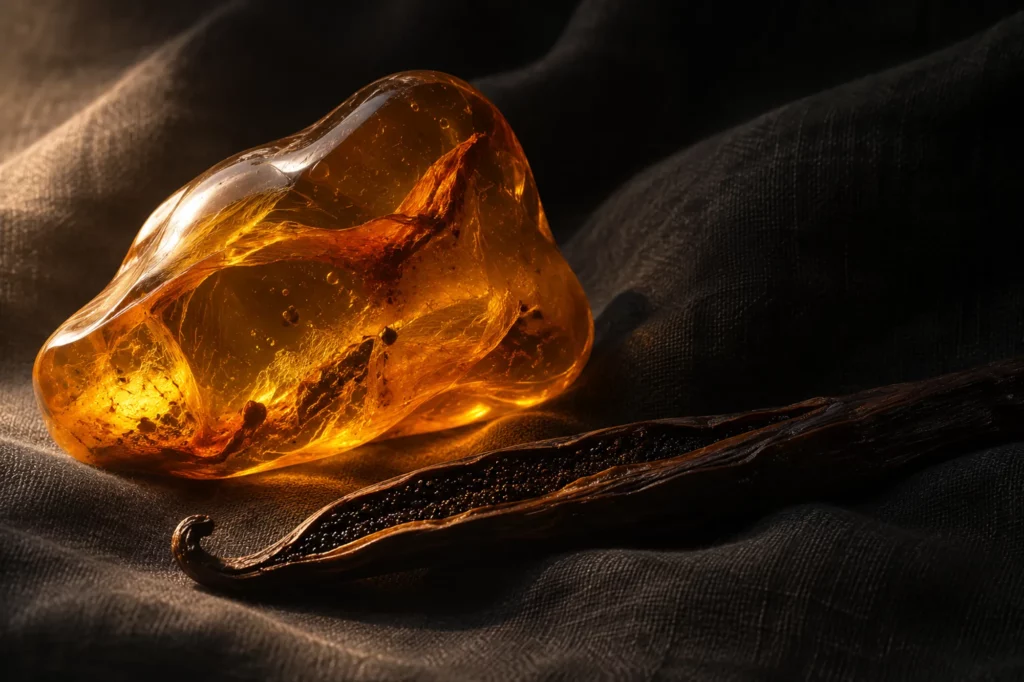
No. Fossil amber has no smell. Amber in perfume is an accord, usually labdanum, vanilla and benzoin.
What is the difference between amber and ambergris?
Amber is a blend of resins and vanilla. Ambergris is a material from the sperm whale, and ambroxan is the molecule perfumers use for its smell.
Are amber fragrances for men or for women?
Mostly for anyone. Of the ambers in the PRFMST app, more than 600 are filed as unisex, more than 270 as masculine and more than 200 as feminine.
When do you wear an amber fragrance?
In the cold months, mostly. Nearly every amber in the PRFMST app is tagged for autumn or winter, about 110 for spring and 35 for summer.
In the app, tap labdanum, benzoin or vanilla on any fragrance page to see everything else that carries the note, or open the Amber family to see all of them with how well each fits your scent DNA.
What is new in this guide
23 November 2026: first edition, with five amber fragrances to know first.
Fragrances in this guide
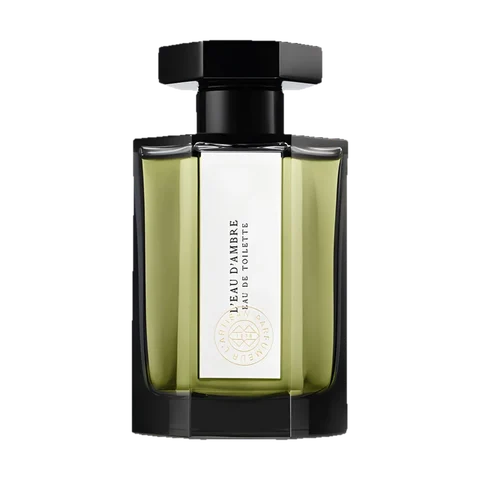 L'Artisan ParfumeurL'Eau d'AmbreEau de Toilette
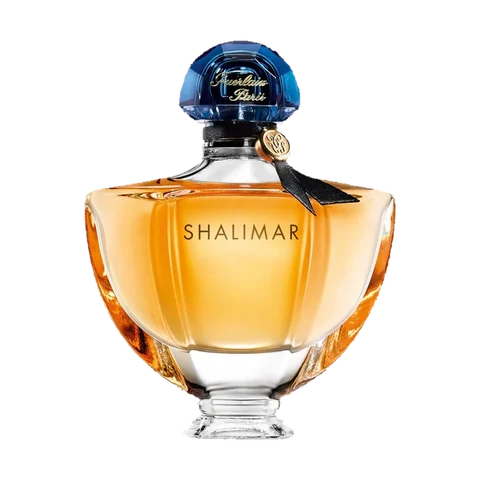 GuerlainShalimarEau de Parfum
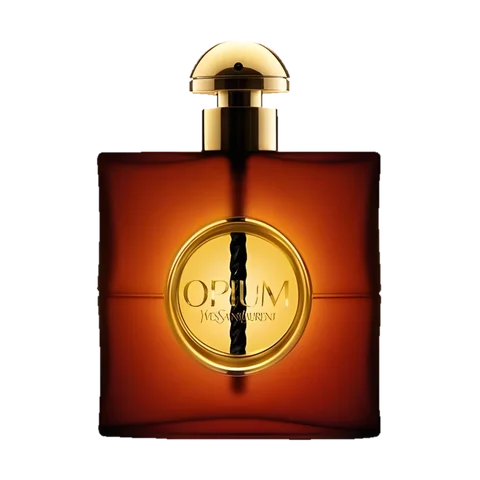 Yves Saint LaurentOpiumEau de Parfum
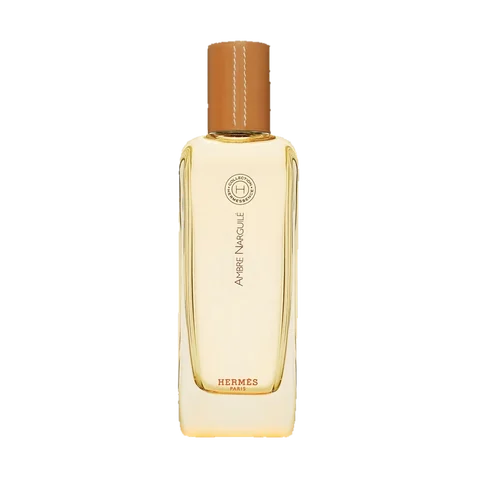 HermèsAmbre NarguiléEau de Toilette
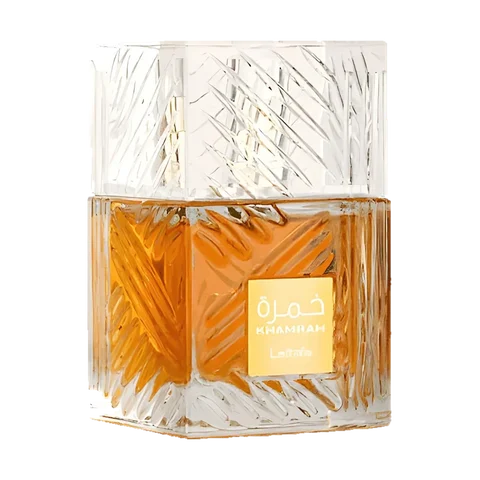 LattafaKhamrahEau de Parfum
All five are in the PRFMST app, with their notes, their families and how well they fit your scent DNA.