Skip to content

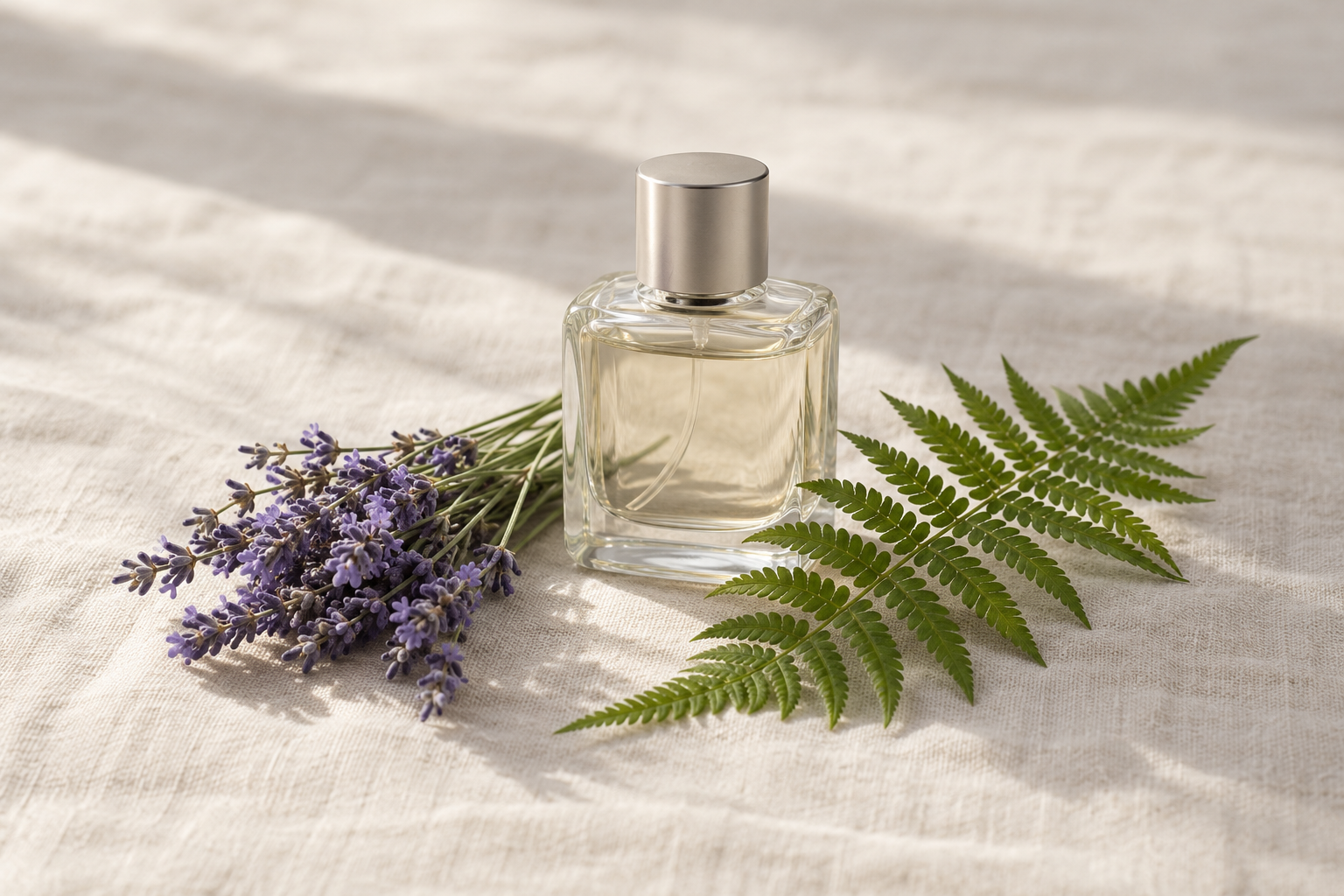
A fougère is a fragrance built on lavender, oakmoss and coumarin, and it is named after a fern that never went into the bottle. The word is French for fern. In 1882 a perfumer imagined how a fern might smell, and his answer still shapes much of what we wear. You probably know it already: the clean, slightly sweet freshness of a good barbershop.
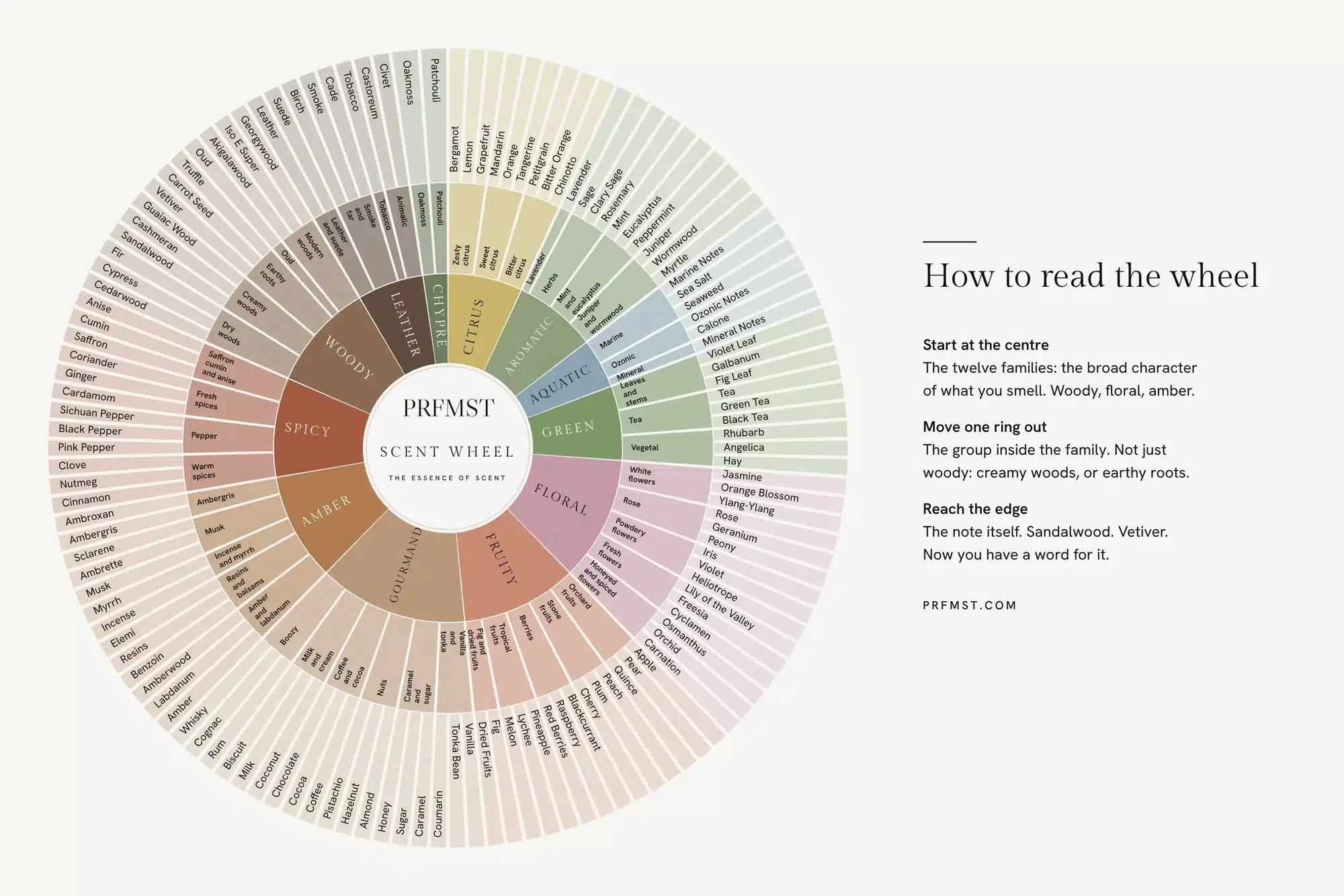
The fougère belongs to the aromatic family, one of the twelve in our guide to the 12 fragrance families. In the PRFMST app, more than 650 fragrances have Aromatic as their main family, and the fougère runs through many of them.
What is a fougère fragrance?
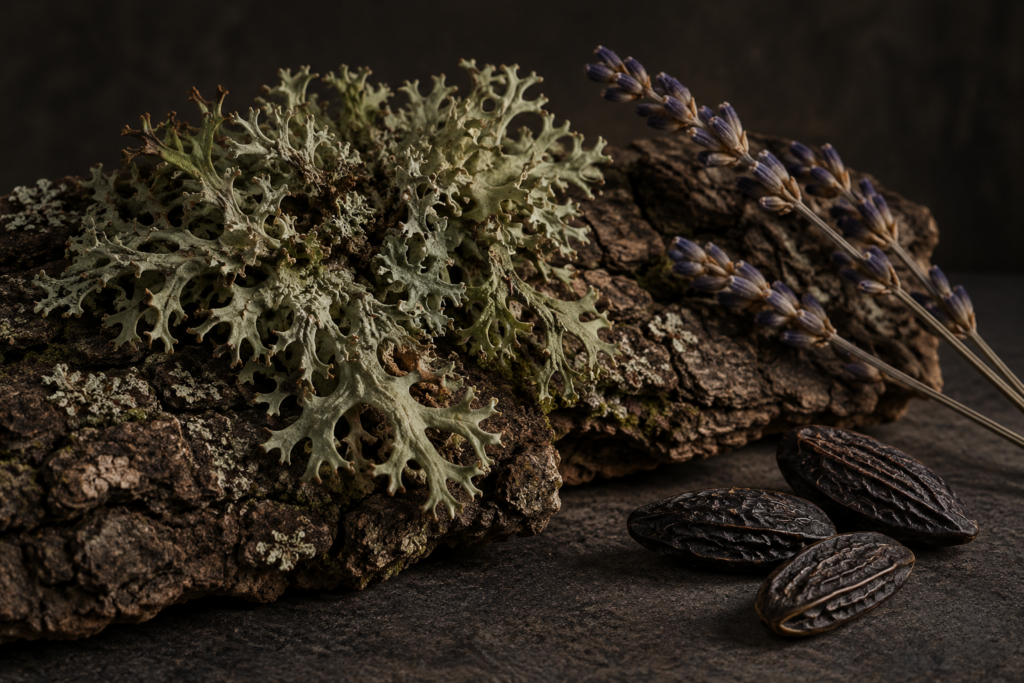
Think of it as three layers that lean on each other. At the top sits lavender: herbal, clean, a little camphorous. In the heart, geranium or herbs such as basil and clary sage keep things green. At the base you find oakmoss, a lichen that grows on oak bark and smells damp, inky and dark, and coumarin, the warm molecule that gives tonka bean its smell of hay, almond and vanilla.
Bergamot often opens the composition. Woods and musks usually close it. But the triangle of lavender, moss and coumarin is what makes a fougère read as one. Sharp and soft at once, like a starched collar on warm skin.
The fern itself plays no part. The name is a picture, not an ingredient. When Azzaro lists “fern” among its notes, it means the accord, not a plant.
Where the fougère came from
The story starts in a laboratory. In 1868 the English chemist William Henry Perkin found a way to make coumarin from compounds in coal tar, so perfumers no longer depended on extracting it from tonka beans, according to McGill University’s Office for Science and Society.
Fourteen years later, Paul Parquet put it to work in Fougère Royale for Houbigant. It was the first perfume on the market to carry synthetic coumarin, and it gave its name to an entire family.
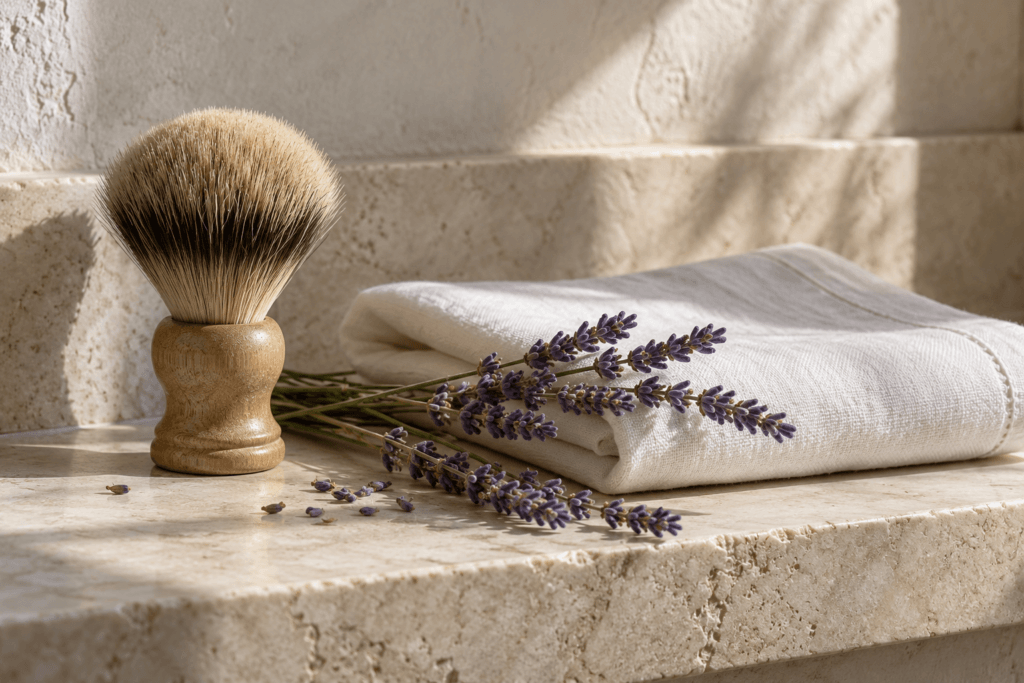
From there, the fougère and the barbershop grew up together. Its clean, soapy freshness echoed traditional shaving soap, and for most of the twentieth century it was simply what a well-groomed man smelled of.
Why the modern fougère smells different
Oakmoss is the part that changed most. The International Fragrance Association (IFRA) limits how much oakmoss extract a perfume may contain and how much atranol and chloroatranol, two of its natural components, that extract may hold, because they can sensitise skin. Perfumers adapted. Some work with cleaned-up oakmoss, others with molecules that echo its mossy depth. Montblanc names one openly in Legend: oakmoss (Evernyl).
So today’s fougère is often lighter, cleaner and woodier than the barbershop classics. Sometimes sweeter too, with more tonka, amber and spice. The skeleton is the same. The clothes are new.
Five fougères, five directions
1. The fougère as tradition: Azzaro Pour Homme
Azzaro Pour Homme (Eau de Toilette, by Gérard Anthony, Richard Wirtz and Martin Heiddenreich) arrived in 1978 and still shows the structure most clearly. It opens with lavender, lemon and basil, moves into star anise, fern and cardamom, and settles on vetiver and oakmoss.
I think its strength is the anise. It adds a cool, faintly sweet edge that keeps the lavender from smelling like a linen cupboard, while the oakmoss underneath gives the dry, grown-up finish people remember. The app files it as Aromatic first, with Woody, for spring, autumn and the office.
2. The fougère turned green: Creed Green Irish Tweed
Creed Green Irish Tweed (Eau de Parfum, 1985) opens with peppermint, verbena, lemon, bergamot and galbanum. Geranium, lavender and violet form the heart, and it rests on sandalwood, cedarwood, ambroxan and oakmoss.
Here the fougère walks out onto wet grass. Galbanum, a bitter green resin, and the violet pull it somewhere cooler and leafier, which is why the app files it as Green first, with Aromatic and Woody beside it. In the app it is a spring and summer fragrance.
3. The fougère made bright: Montblanc Legend
Montblanc Legend (Eau de Toilette, 2011) puts lavender, citrus and bergamot at the top, white cedar, rose and jasmine in the heart, and oakmoss (Evernyl), sandalwood and tonka bean at the base.
Legend shows how far the family has travelled towards freshness. The flowers soften the lavender, the tonka rounds off the base, and the moss is more shadow than voice. Aromatic first, Woody second, for spring to autumn and every day.
4. The fougère in silver: Tom Ford Fougère d’Argent
Tom Ford Fougère d’Argent (Eau de Parfum) opens with mandarin, bergamot and ginger, keeps lavender at its heart, and closes on akigalawood, cistus and coumarin.
The name says it plainly, and the formula reads almost like a diagram: citrus, lavender, coumarin. Cistus, the rockrose shrub that gives perfumery its labdanum, adds a resinous warmth. Akigalawood, a woody material made from patchouli, brings a dry, peppery edge. In the app: Aromatic first, with Citrus and Woody, from spring to autumn.
5. The fougère for everyone: Nishane B-612
Nishane B-612 (Extrait de Parfum) opens with lavender, geranium and cypress, moves through cashmeran, cedarwood, sandalwood and patchouli, and settles on musk, oakmoss and tonka bean.
The full triangle is there: lavender above, geranium in the middle, moss and tonka below. What changes is the texture. Cashmeran, a soft musky-woody molecule, and the extrait concentration bring it closer to the skin, warmer and less starched. The app lists it as unisex, which says a lot about where the fougère is heading.
How to choose your fougère
- If you like the classic barbershop clean, try a traditional fougère with clear oakmoss, like Azzaro Pour Homme.
- If you like green, outdoor freshness, try a fougère with galbanum and violet, like Green Irish Tweed.
- If you like something bright and easy for every day, try a citrus-led modern fougère, like Montblanc Legend.
- If you like warmth with a resinous edge, look for more coumarin and cistus, like Fougère d’Argent.
- If you like a softer fragrance that sits close, try an extrait with musk and woods, like B-612.
The fougère, briefly answered
What does fougère mean in perfume?
Fougère is French for fern. In perfume it names a structure built on lavender, oakmoss and coumarin, first used in Fougère Royale by Houbigant in 1882. No fern goes into it: the name describes an imagined smell.
What does a fougère fragrance smell like?
Fresh, herbal and clean at the start from lavender, with a soft, hay-like sweetness from coumarin and a dry, mossy depth underneath. Many people know it as the smell of a classic barbershop.
Is a fougère the same as an aromatic fragrance?
Almost. Aromatic is the wider family of herbal fragrances built on lavender, sage, rosemary and basil. The fougère is its best-known structure, defined by lavender, oakmoss and coumarin together.
Are fougères only for men?
They grew up as men’s fragrances, and most of the classics were made for men. Many modern fougères are softer and unisex, like Nishane B-612, and the structure suits anyone who likes clean, herbal warmth.
In the app, tap lavender, oakmoss or tonka bean to see every fragrance that carries the note, or open any of the five to see how it fits your scent DNA. New to the fougère? Smell one classic and one modern version side by side. The family explains itself in an afternoon.
Fragrances in this story
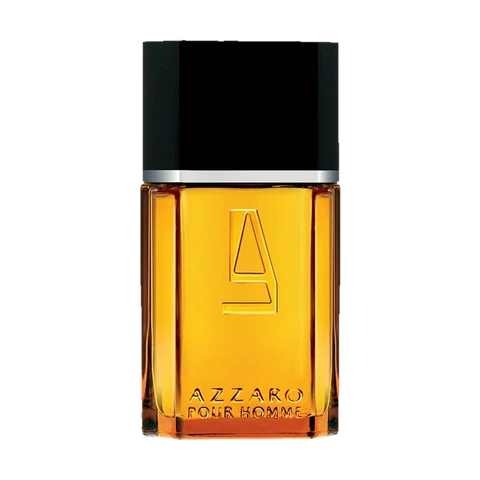 AzzaroPour HommeEau de Toilette
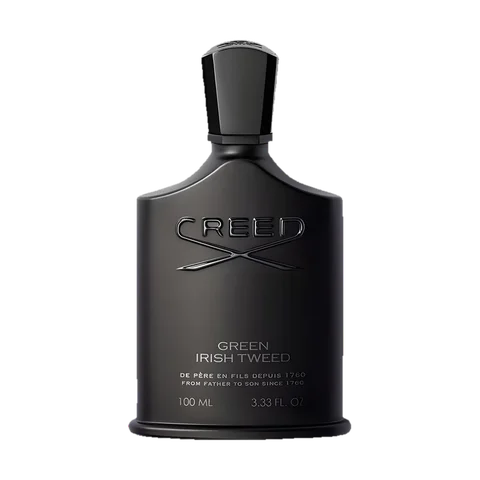 CreedGreen Irish TweedEau de Parfum
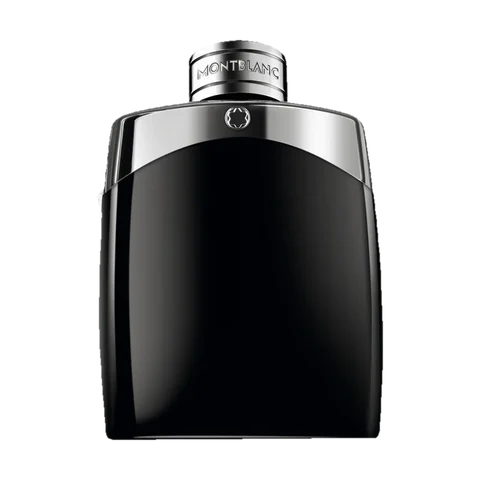 MontblancLegendEau de Toilette
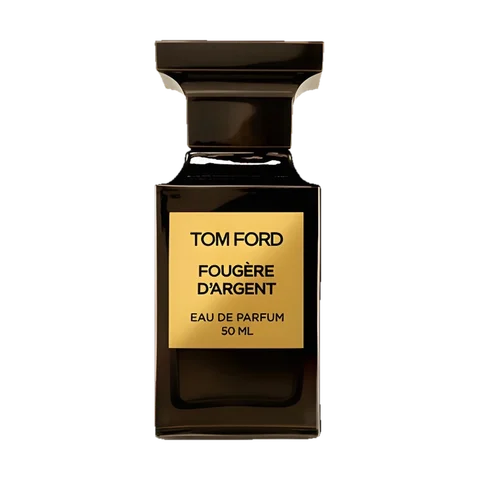 Tom FordFougère d'ArgentEau de Parfum
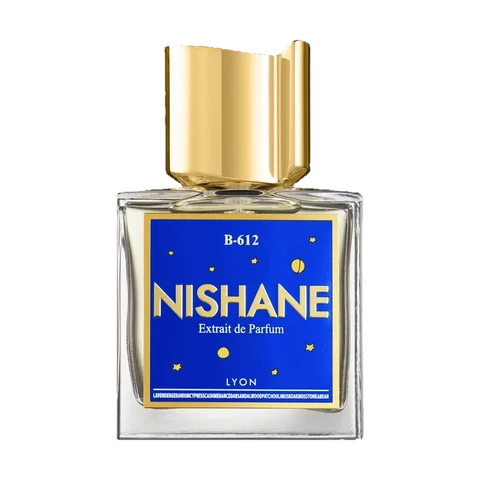 NishaneB-612Extrait de Parfum
Find all five in the PRFMST app, with their notes, families and how well they fit your scent DNA.